
Behind the Lines: How Journalists Gain Access to War Zones
The Media Knows the Rules to Access a Warzone—So Why Pretend They Don’t in Gaza?

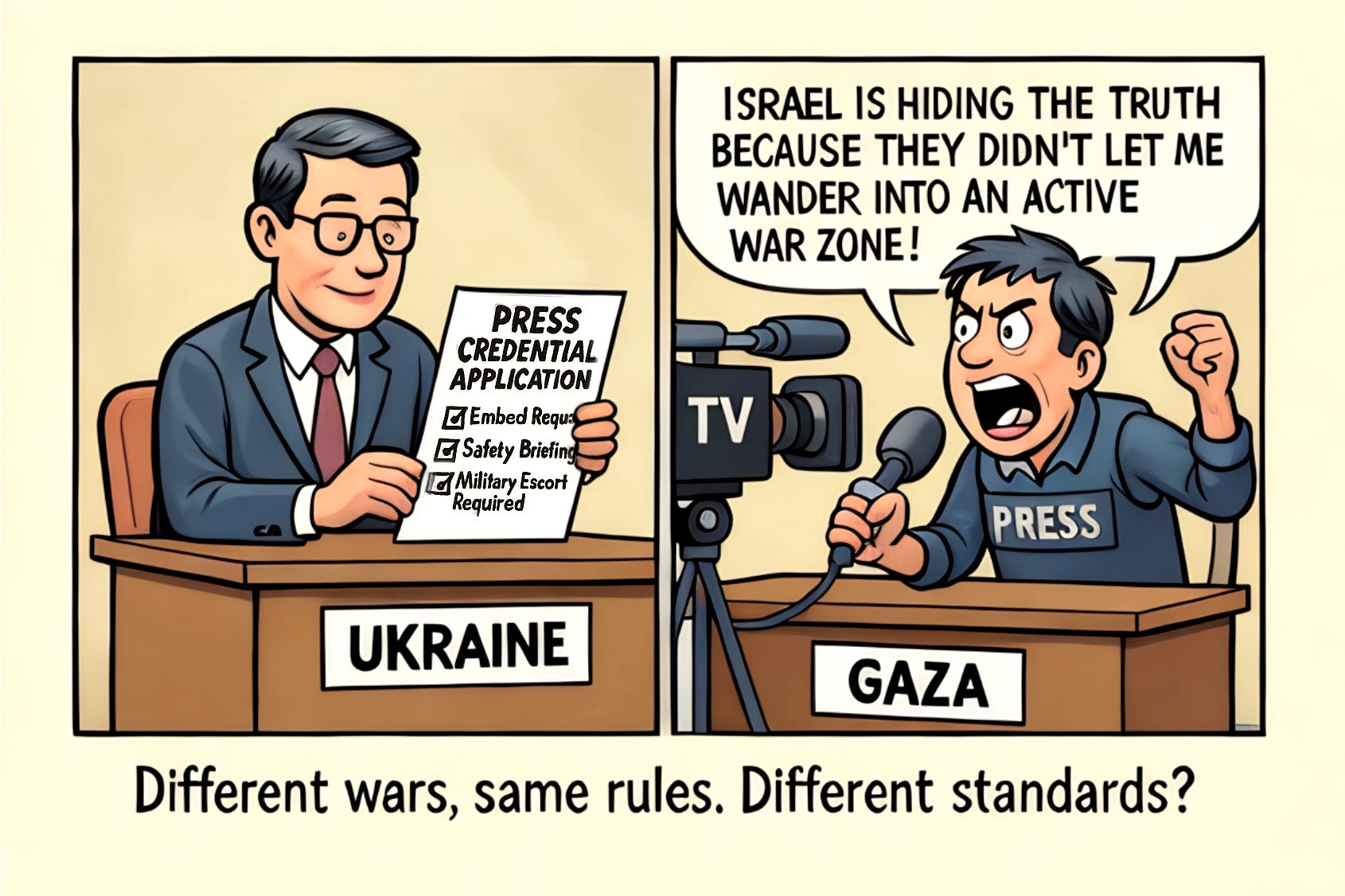
War reporting is vital—but it’s not a free-for-all. Journalists don’t just show up to the frontlines, flip on a camera, and start broadcasting. In every modern war—from Ukraine to Iraq—access is controlled, dangerous, and requires coordination with military and government authorities. But when it comes to Gaza, international media and journalists like Piers Morgan suddenly pretend none of this applies.
Since October 2023, major media outlets and journalists—including figures like Piers Morgan—have demanded that Israel allow unrestricted press access to one of the most dangerous war zones on earth. But that’s not how war reporting has ever worked. In Ukraine, Iraq, Syria, and Afghanistan, journalists must be accredited, escorted, and follow strict operational protocols. Violating those rules meant being expelled—or worse.
Israel is no different. Reporters must be credentialed by the IDF and embedded through official channels to enter Gaza. Since October 7th, many have followed those procedures and gained access to Gaza. But most have demanded special access far beyond what any modern military would allow. When Israel enforces the same security protocols observed in every other conflict zone, it’s accused of “hiding the truth.” That accusation isn’t just wrong—it’s willfully dishonest.


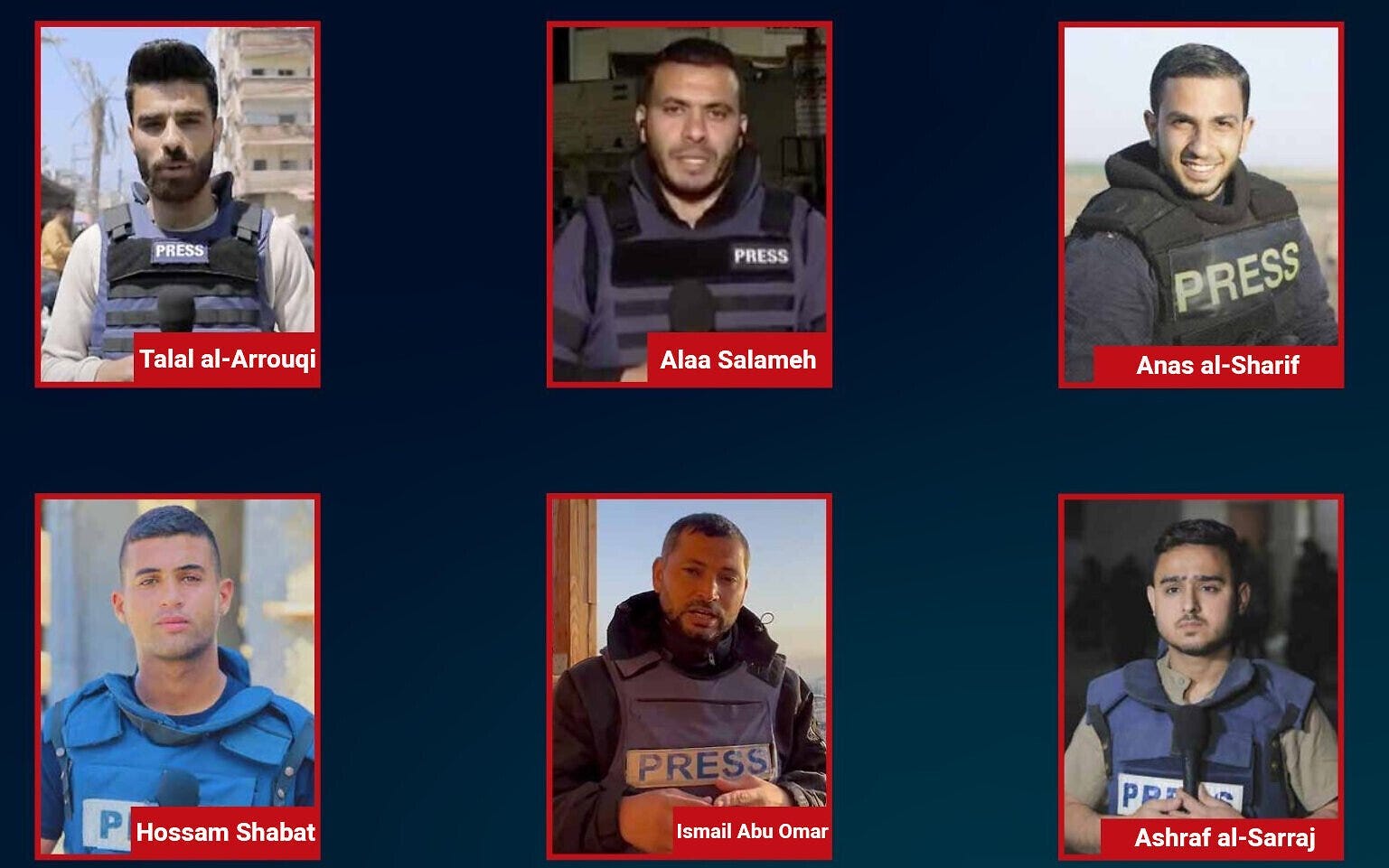
Meanwhile, much of the reporting from inside Gaza comes from so-called “local journalists” most linked to Hamas and other terror groups. Investigations have documented these ties. Still, Western media uncritically amplify their footage and narratives without context or verification. Basic journalistic ethics vanish when the subject is Israel.
And let’s not pretend Gaza is a black box. It's one of the most visually documented conflicts in history. Smartphones and social media flood the internet with footage—some authentic, some staged, some contradictory. Scenes of civilian tragedy sit beside videos of Hamas fighters launching rockets from hospitals, or TikToks of people dining in bustling cafes—all from within the same war zone.
Footage that contradicts the narrative? Ignored. Hamas’s use of human shields—routine. In any other conflict, that’s front-page news. In Gaza, it’s memory-holed. The media isn’t confused. It’s complicit.
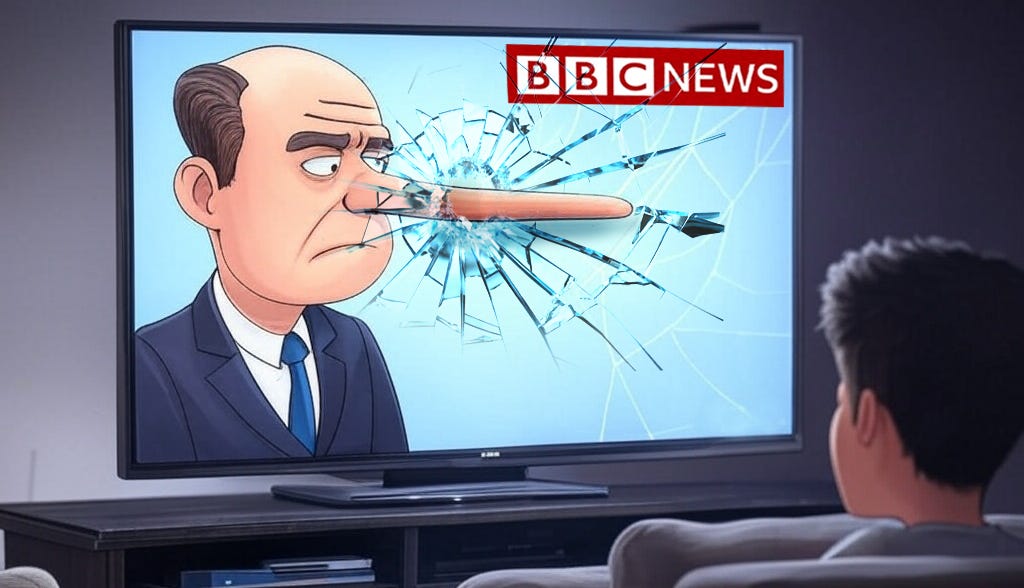
Look at Ukraine again. Reporters respect blackout rules, avoid filming sensitive positions, and risk blacklisting if they violate terms. That’s considered responsible journalism. So why the double standard for Israel? This model is nearly identical to Israel’s. The difference lies not in the policy, but in the media’s agenda when covering each nation.
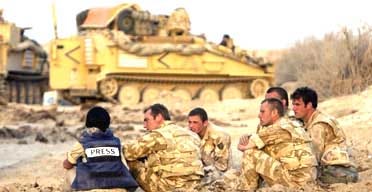
In Iraq and Afghanistan, journalists embedded with U.S. or NATO forces during major campaigns. The 2003 Iraq invasion marked the beginning of formalized embed programs, giving reporters proximity to battle—but with strict limitations. They couldn’t report troop locations, upcoming missions, or classified intel. The same rules applied in Afghanistan, where independent journalism outside embeds carried huge risks: kidnapping, targeting by insurgents, or detention by suspicious authorities. None of this was controversial. It was common sense.
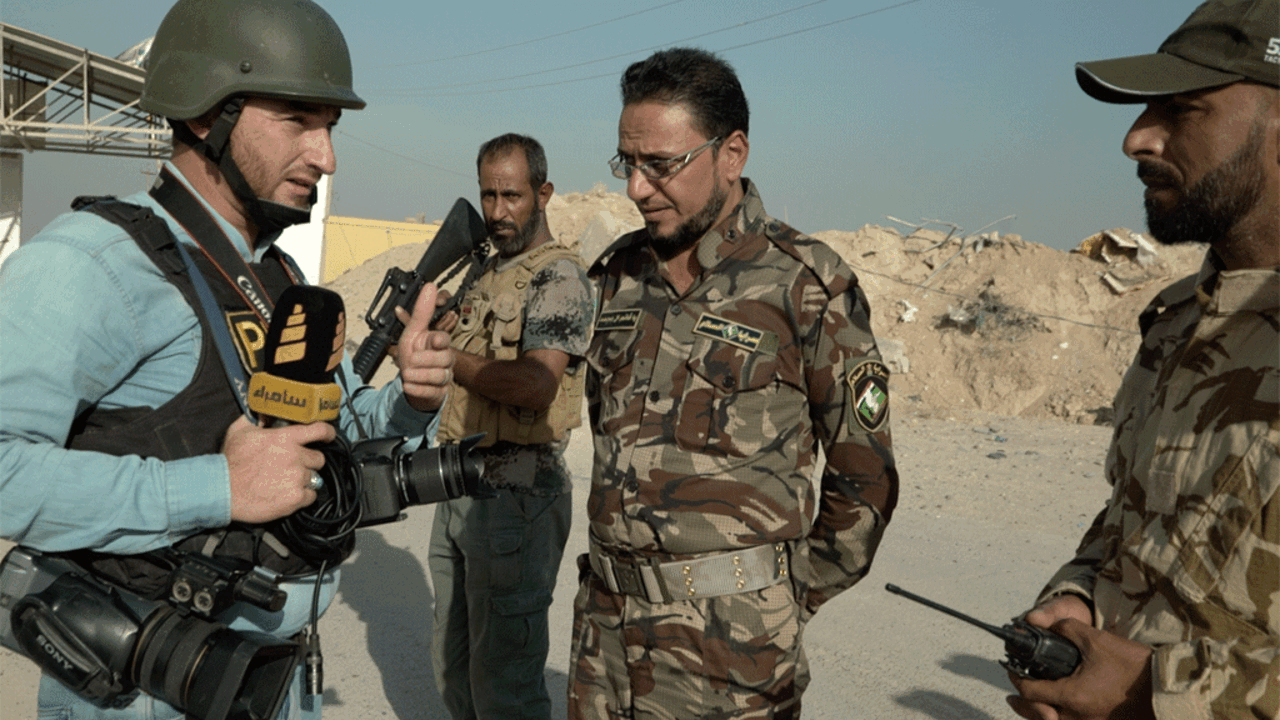
Covering the war against ISIS was a logistical and moral gauntlet. During the brutal Battle of Mosul (2016–2017), journalists had to coordinate with Iraqi or Kurdish forces for any access an be embedded with Iraqi special forces. In Syria, the risks for journalists were even greater. In areas controlled by the Syrian Democratic Forces (SDF)—primarily Kurdish-led forces in regions like Rojava—journalists could gain access by applying for press permits through local media offices or civil councils. The Kurdish authorities, much like other organized military groups, enforced a system of accreditation and escorts, especially in or near active combat zones.
Despite these conditions, no media outlet claimed they were being “denied access” or accused the U.S. military of hiding war crimes. Why the double standard when it comes to Israel? So why is Israel expected to act differently? Why are Hamas talking points treated as news? Why are media outlets pretending they don’t know the rules?
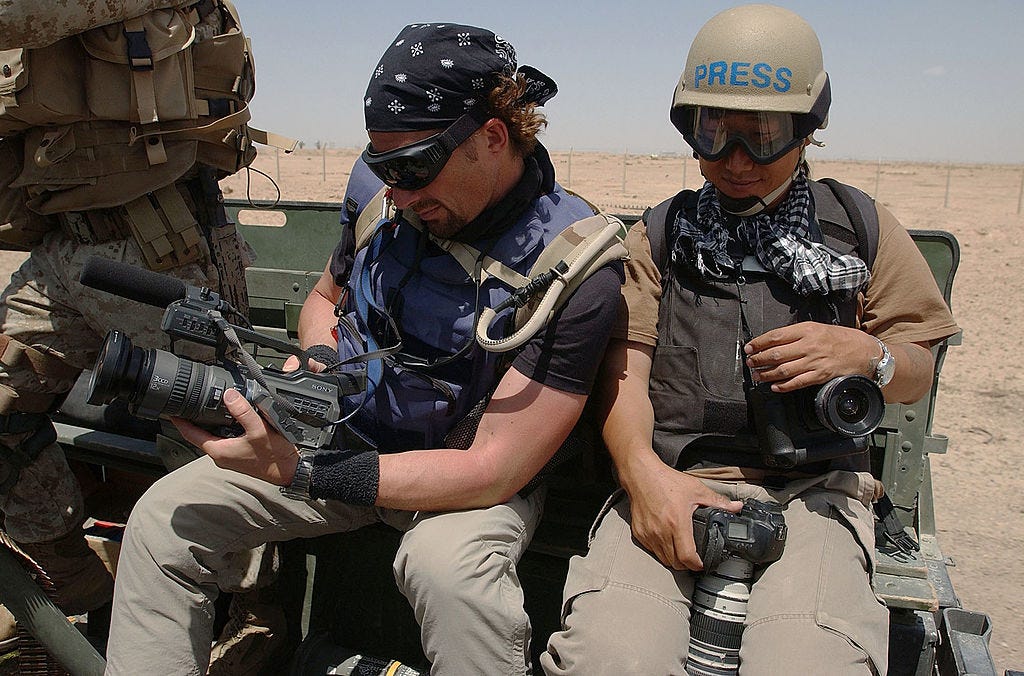
The answer is uncomfortable: many international outlets are less interested in truth than narratives. When they ignore how war zones actually work to accuse Israel of bad faith, they’re not holding power to account—they’re running interference for terrorist propaganda. War reporters are meant to serve the public as our eyes and ears on the front lines. But the reality of gaining access is more than a logistical hurdle. Journalists must play by the rules. And so should media outlets.
The current situation—where Israel is held to standards no other military faces, and where Hamas propaganda is laundered through the world’s biggest newsrooms—isn’t just biased. It’s deliberate propaganda and it’s dangerous.
In today’s info war against Israel, the truth isn’t just the first casualty—it’s the target. And far too often, the media is pulling the trigger.. And when the media becomes part of the propaganda machine, it doesn't just fail journalism—it fails humanity.
